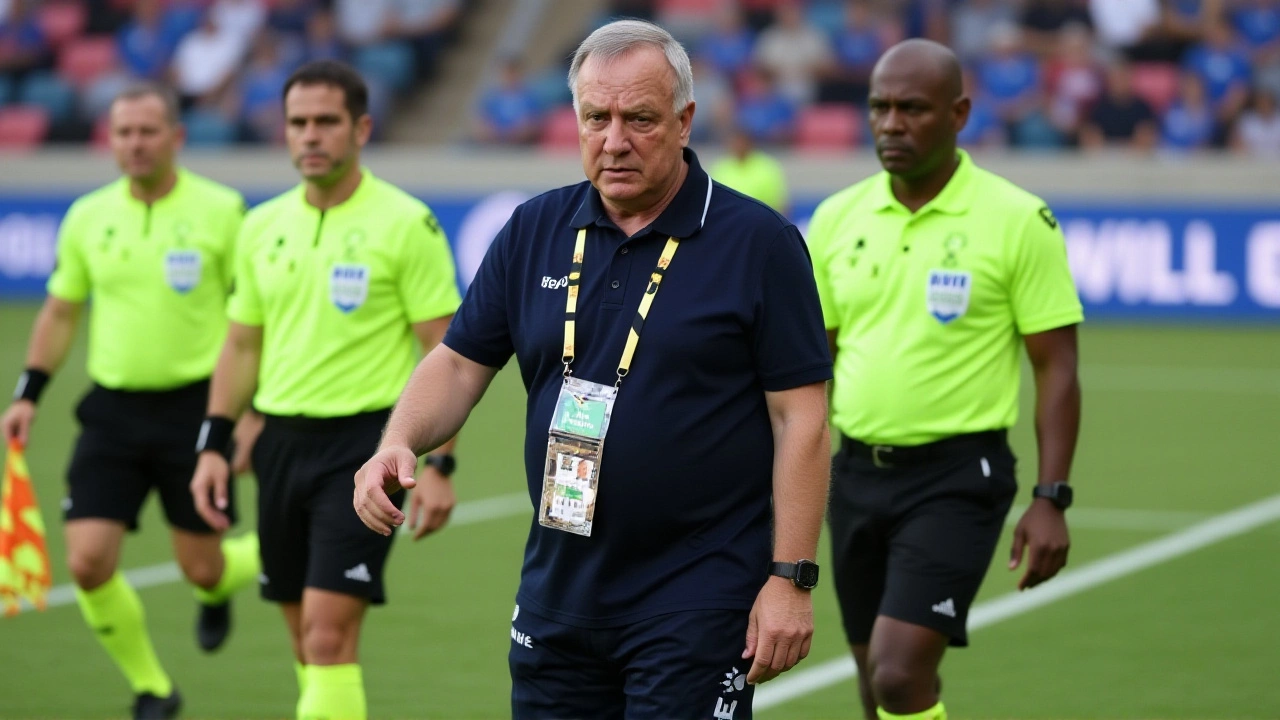
When Dick Advocaat boarded a flight from Kingston to the Netherlands on Sunday, November 17, 2025, he left behind more than a football team—he left behind history. The 78-year-old Dutch coach, whose eighth national team job has brought Curaçao within reach of the 2026 FIFA World CupUnited States, Canada, and Mexico, is watching from afar as his players prepare for the most important match of their lives. With Advocaat gone due to urgent family matters, the tiny Caribbean nation—population just 157,153—stands on the brink of becoming the smallest country ever to qualify for the World Cup. And somehow, the absence has made them stronger.
A Coach’s Heartbreak, a Team’s Fire
Advocaat’s departure wasn’t planned. He arrived in Kingston on Saturday, November 16, 2025, only to leave the next day. The Federashon Futbòl Kòrsou (FFK) confirmed the move was due to private family reasons, with no further details disclosed. But the emotional weight was clear. In his statement, Advocaat called it a decision made "with a heavy heart." Yet, the players didn’t see it as a setback—they saw it as a charge. "This is a lot bigger," said an anonymous player to Flashscore.com. "Then we were playing for a club, now it’s for our country. You cannot compare it. We are going to do it here for the country and for our coach Dick Advocaat." Captain Leandro Bacuna, born in Nijmegen and now playing in Saudi Arabia, put it simply: "We started this all together and now we want to finish it together." Goalkeeper Eloy Room, one of 22 Dutch-born players in the 26-man squad, echoed that sentiment: "It’s bad news for us, but we understand family comes first. But it has changed nothing for us and our goal."The Numbers Behind the Dream
Curaçao sits atop CONCACAF Group B with 14 points after a stunning 7-0 thrashing of Bermuda on November 14, 2025. Jamaica, managed by former England boss Steve McClaren, trails by a single point with 13. A draw or win in the final match at National Stadium in Kingston on Tuesday, November 19, 2025, sends Curaçao to Qatar 2022-level glory. Lose, and Jamaica jumps into the March 2026 inter-confederation playoffs. The stakes? Beyond the World Cup, it’s about legacy. The current record holder for smallest World Cup qualifier is Iceland (population 364,134 in 2018). Curaçao would shatter that by more than half. And it’s not just luck—this team has been unbeaten in 10 qualifiers since Advocaat’s first match, a 2-1 win over Saint Vincent and the Grenadines on March 24, 2023.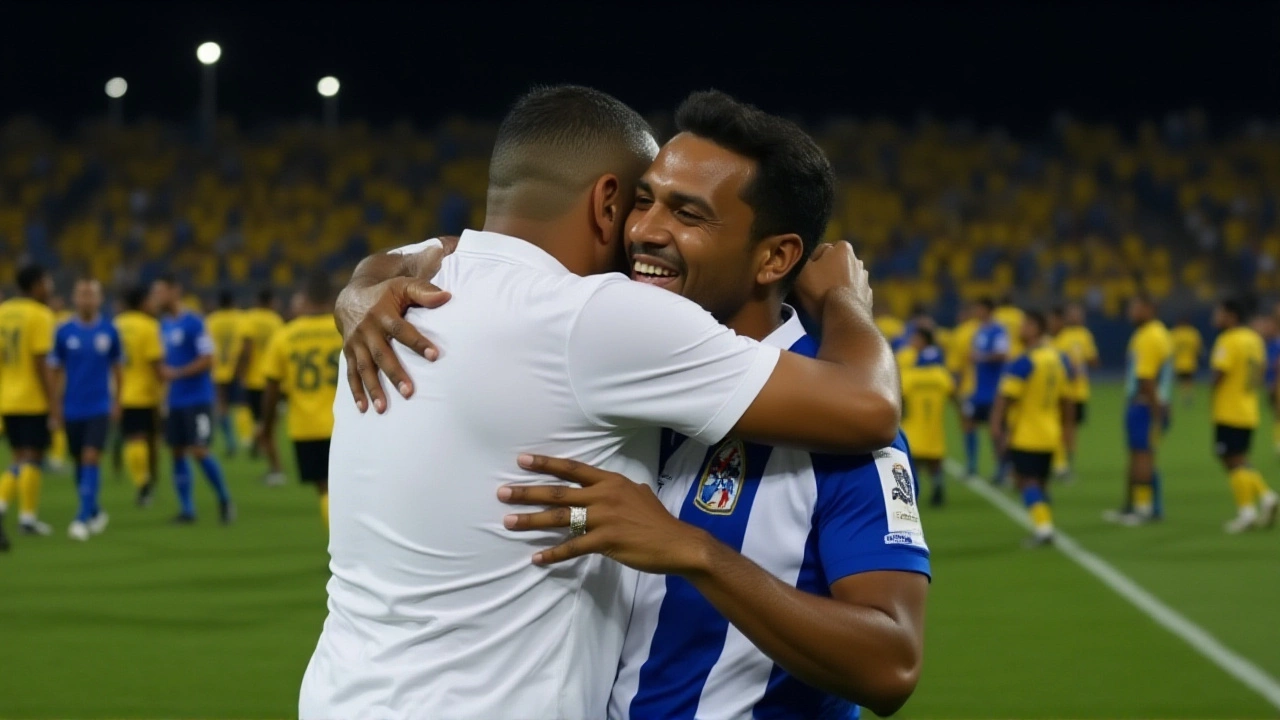
Who’s Running the Show?
With Advocaat gone, the burden falls to two Dutch veterans: assistant coaches Dean Gorré and Cor Pot. Gorré, a former Netherlands international, and Pot, who’s managed across CONCACAF for decades, now run daily training, tactics, and team meetings from the Terra Nova All-Suite Hotel in Kingston. Advocaat remains connected—via video calls, tactical notes, and late-night WhatsApp messages. "He’s still the brain," said one staff member. "We’re just the hands." The squad’s composition tells its own story: 22 players born in the Netherlands, only four on the island itself. That’s no accident. Curaçao, a self-governing part of the Kingdom of the Netherlands, has long relied on Dutch-raised talent with ancestral ties. It’s a model that’s worked—until now.What’s at Stake Beyond the Pitch
This isn’t just about football. It’s about identity. For a nation of fewer than 160,000 people, qualifying for the World Cup would be a global spotlight few ever see. Schools would shut down for the match. Bars would overflow. Children would wear jerseys with "Curaçao" on the back, even if they’ve never set foot on the island. "Imagine a place where you can’t even get a decent coffee without someone asking if you’re from Curaçao," said a local journalist in Willemstad. "Now imagine them on the biggest stage in sports. It’s not just pride—it’s proof that size doesn’t define potential." The FFK has activated its emergency protocol, granting Gorré and Pot full authority until Advocaat’s return. His contract, signed February 1, 2023, runs through December 31, 2025—meaning even if he doesn’t return before the World Cup, his legacy is already cemented.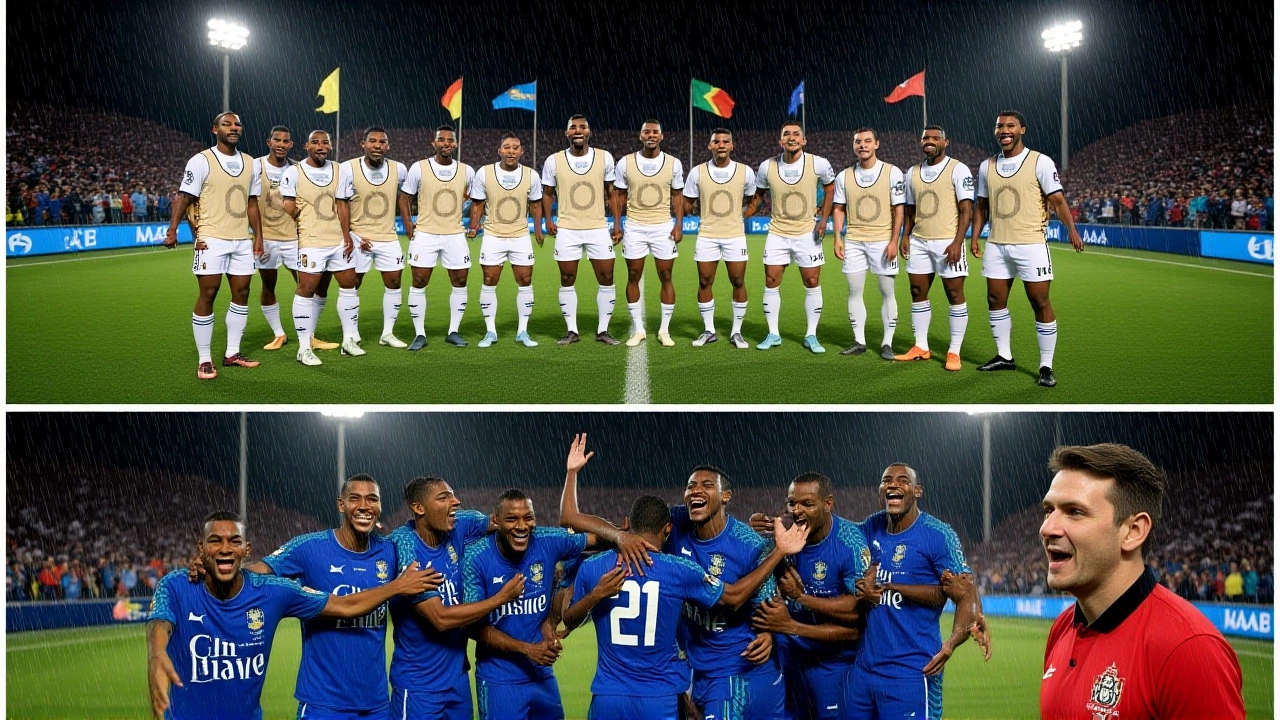
What Comes Next?
If Curaçao qualifies, they’ll join the 48-team 2026 World Cup field alongside giants like the United States, Brazil, and Germany. Their group stage opponents? Unknown. But their path? Unthinkable just two years ago. If they fall? Jamaica advances. Advocaat returns to the Netherlands. And Curaçao waits—for another cycle, another chance, another generation. But for now, on a Tuesday night in Kingston, under 35,000 roaring lights, it’s not about who’s on the bench. It’s about who’s on the field.Frequently Asked Questions
How has Curaçao’s squad composition helped them reach this point?
Curaçao’s 26-man squad includes 22 players born in the Netherlands, many of whom were raised in Dutch academies but hold Curaçaoan heritage through family ties. This allows them to access top-tier youth development while representing a nation with limited domestic infrastructure. The strategy has paid off: 10 straight qualifying wins since 2023, with key players like Eloy Room and Leandro Bacuna bringing Premier League and European club experience to a team that otherwise couldn’t compete globally.
Why is Dick Advocaat’s absence so significant?
Advocaat has coached six other national teams, including the Netherlands and Russia, and is one of the most experienced international managers in history. His tactical discipline, psychological control, and ability to unify multicultural squads have been central to Curaçao’s rise. His absence isn’t just about losing a coach—it’s losing the architect of their entire qualification campaign, making their resilience even more remarkable.
What happens if Curaçao qualifies but Advocaat doesn’t return?
Advocaat’s contract runs through December 31, 2025, covering the World Cup. If he doesn’t return, the FFK will likely appoint Dean Gorré or Cor Pot as permanent head coach. But regardless of who’s in charge, the team’s identity—built under Advocaat—will remain. His fingerprints are on every training drill, every set-piece routine, every player’s mindset. He’s already written the playbook.
How does Jamaica’s situation compare?
Jamaica, under Steve McClaren, has been inconsistent—drawing 1-1 with Trinidad and Tobago on November 14, 2025, after winning just three of their eight qualifiers. They’ve relied heavily on home advantage and a few star players like Kevon Lambert. A win over Curaçao would be their first in six matches and send them to the playoffs. But their squad lacks the cohesion and depth Curaçao has built over two years under Advocaat’s system.
Why is this match being played in Kingston instead of Curaçao?
Curaçao’s home stadium, the Ergilio Hato Stadium in Willemstad, doesn’t meet FIFA’s minimum capacity or infrastructure standards for World Cup qualifiers. The FFK chose to play the decisive match in Kingston because Jamaica, as the higher-ranked team, was granted home advantage under CONCACAF rules. It’s a twist of fate: Curaçao must win on enemy soil, without their coach, to make history.
What’s the broader impact if Curaçao qualifies?
A qualification would rewrite the narrative of small nations in global football. It would validate the diaspora model—where countries leverage expatriate talent with ancestral ties—and likely inspire other Caribbean and Dutch territories like Aruba or Sint Maarten to invest in national programs. FIFA might even reconsider qualification formats to better reward underdog nations. For Curaçao, it’s not just a tournament—it’s a turning point.